
Platelet Rich Plasma (PRP) Therapy in Manchester and Glasgow
Platelet-rich plasma therapy more commonly known as PRP is one of the most established and widely used regenerative treatments in orthopaedic medicine. It uses a concentrated preparation of your own blood platelets to deliver growth factors directly to an injured or degenerated area, supporting the body's natural repair processes in a way that conventional treatments such as steroid injections or anti-inflammatory medication simply cannot replicate.
At Ortho Remedy Clinic, PRP is used across a wide range of musculoskeletal conditions, from knee osteoarthritis and rotator cuff problems to Achilles tendinopathy and elbow pain. Our clinics in Manchester and Glasgow are led by orthopaedic surgeon Mr Armughan Azhar, who has over 25 years of experience in non-surgical joint and soft tissue care.
What Is PRP and How Does It Work?
The blood that circulates through your body contains several components, including red blood cells, white blood cells, plasma, and platelets. Platelets are best known for their role in clotting, but they also contain a rich supply of growth factors proteins that signal cells to migrate to an injury site, promote new tissue formation, and regulate inflammation.
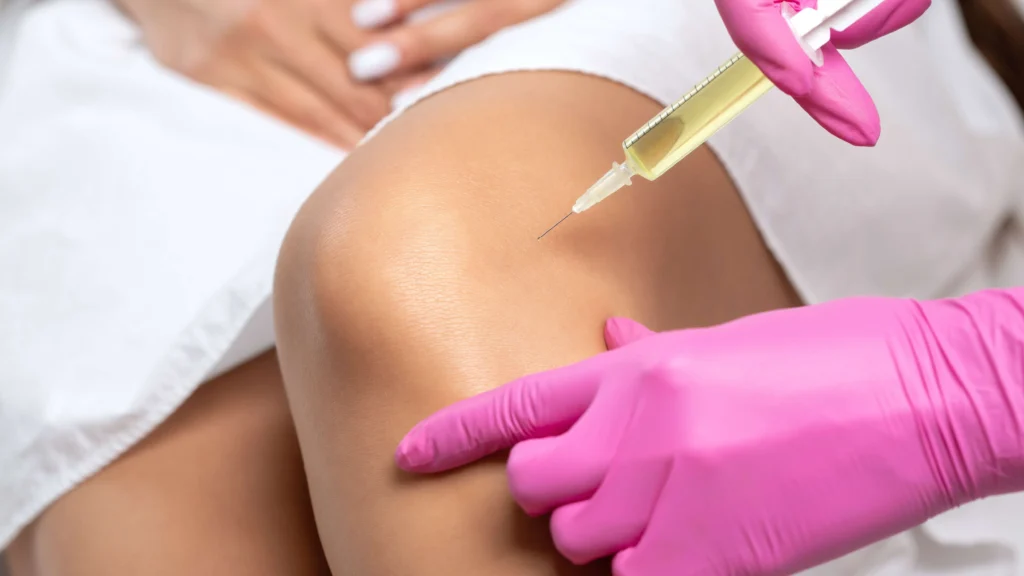
In PRP therapy, a small amount of your blood typically around 15 to 20ml is drawn from a vein, usually in the arm. This sample is then placed in a centrifuge and spun at a precisely calibrated speed to separate the components and concentrate the platelets. The resulting plasma, which contains a platelet concentration several times higher than that found in normal blood, is then injected directly into the affected joint, tendon, or soft tissue area.
Appointments
Contact us today for further information or fill the form on our contact us page to request a call back from our team
The injection is performed under ultrasound guidance at Ortho Remedy Clinic, which ensures the PRP is placed with precision in exactly the area that needs it. The entire process from blood draw to injection typically takes around 45 minutes to one hour.
Clinical evidence suggests that the concentrated growth factors stimulate a localised healing response, reduce chronic inflammation, and support the regeneration of damaged tissue over the weeks that follow. Unlike steroid injections, which suppress inflammation temporarily without promoting repair, PRP works with the tissue rather than masking the problem.

Your Treatment JourConditions Treated with PRP at Ortho Remedy Clinicney
PRP therapy is used to treat a wide variety of orthopaedic and musculoskeletal conditions. The most common presentations seen at our Manchester and Glasgow clinics include:
Knee Conditions
Knee osteoarthritis is one of the most frequent reasons patients seek PRP therapy. For those with mild to moderate joint degeneration, PRP can reduce pain and swelling, improve mobility, and slow cartilage loss sometimes enabling patients to delay or avoid a knee replacement. PRP is also used for meniscal tears, patellar tendinopathy, and ligament injuries. Patients seeking targeted care in their city can find specific information on our PRP injection for the knee in Manchester and PRP injection for the knee in Glasgow pages.
Tendon Injuries
Tendinopathy responds well to PRP in many cases. Conditions including Achilles tendinopathy, patellar tendinopathy, rotator cuff tendinopathy, tennis elbow, and golfer’s elbow are regularly treated at our clinics. For more information specific to tendon conditions, visit our PRP injection for tendinitis page.
Shoulder Problems
Rotator cuff tears, shoulder impingement, and early shoulder osteoarthritis are among the conditions where PRP can support healing without the need for surgical intervention. Our shoulder pain treatment page covers the full range of shoulder conditions we manage.
Sports Injuries
Ligament sprains, muscle tears, and partial tendon ruptures that arise through sport are increasingly managed with PRP rather than surgery. Our sports injuries page provides more detail on the conditions we treat across both of our clinics.
Hand and Wrist Conditions
Basal joint arthritis of the thumb, De Quervain’s tenosynovitis, and trigger finger can all benefit from PRP or guided injection therapy. You can find more information on our hand and wrist conditions page.
What Can I Realistically Expect from PRP?
Honest expectations are important, and we believe patients deserve a straightforward answer to this question. PRP is not a cure for any condition. What it can do in appropriate patients with suitable conditions is reduce pain, reduce inflammation, slow degeneration, and support the body’s own healing response to an extent that conventional treatments cannot match.
For mild to moderate osteoarthritis, many patients achieve significant and lasting pain relief following a course of one to three injections. For tendon injuries, improvement is often evident within six to eight weeks and continues to develop over three to six months.
PRP is not effective for everyone. Severely degenerated joints with minimal remaining cartilage are less likely to respond well, and in those cases we may recommend bone marrow aspirate concentrate (BMAC) therapy or adipose-derived cell therapy as a more powerful alternative.

How PRP Compares to Cortisone Injections
Cortisone (corticosteroid) injections have been used for decades to manage joint and soft tissue pain. They work quickly and can provide meaningful short-term relief. However, the effects are typically temporary lasting weeks to a few months and repeated injections carry a risk of tissue thinning and weakening of tendons over time. PRP works differently. Rather than suppressing inflammation, it promotes healing at the cellular level. The improvement it delivers tends to be slower to develop but more sustained, and because it uses the patient’s own blood components carries no risk of rejection or allergic reaction. For patients who have had good but short-lived results from cortisone injections, PRP is often the logical next step. You can learn more about cortisone injections and how they compare on our cortisone injection for arthritis page.
The PRP Process at Ortho Remedy Clinic
- Consultation
- Preparation
- Blood Draw and Processing
- Injection
- Aftercare
Mr Azhar reviews your history and imaging, confirms that PRP is appropriate for your condition, and explains what to expect.
On the day of treatment, patients are asked not to take anti-inflammatory medication (such as ibuprofen or naproxen) for at least one week beforehand, as these drugs interfere with platelet function. There are no dietary restrictions.
A small blood sample is taken and processed in the centrifuge at the clinic. This takes approximately 15 to 20 minutes.
The concentrated PRP is injected under ultrasound guidance into the treatment area. The procedure is performed under local anaesthetic where required.
Patients should avoid strenuous activity and anti-inflammatory medication for at least 14 days after treatment. Some temporary soreness is normal. Most patients return home the same day and resume light activities immediately.
Book Your Consultation.
You are one step away from getting the best non-surgical treatments at Ortho Remedy!
Contact Us Today To Make An Appointment
Patients might expect considerable improvement in their symptoms during the course of their recovery. This approach may prevent the need for more invasive therapies, such as surgery or the usage of drugs for an extended period. While conventional therapies, such as corticosteroid injections, may give temporary comfort and reduce inflammation, PRP injections encourage damage repair in a short amount of time with fewer adverse effects

Get In Touch
Imagine the possibility where you don’t need pain medication or the need for a medical operation can be sustained or eliminated. There are now therapies available that may increase your body’s natural ability to repair thanks to modern regenerative medicine technology. If you want to learn more about it, please contact us right now.
Working Hours
- MONDAY 9AM – 6PM
- TUESDAY 9AM – 6PM
- WEDNESDAY 9AM – 6PM
- THURSDAY 9AM – 6PM
- FRIDAY 9AM – 6PM
- SATURDAY 9AM – 4PM
Newsletter
MANCHESTER CLINIC
GLASGOW CLINIC
Frequently Asked Questions
Most frequent questions and answers
Yes. Because PRP uses your own blood, there is no risk of disease transmission, allergic reaction, or rejection. Temporary soreness or minor swelling at the injection site is common and usually resolves within a few days.
This depends on the condition being treated. Some patients achieve significant relief from a single injection. Others, particularly those with chronic osteoarthritis or long-standing tendon problems, may benefit from a course of two or three injections spaced four to six weeks apart. Mr Azhar will advise you based on your individual assessment.
Yes. There are no dietary restrictions before a PRP procedure. You should, however, avoid anti-inflammatory medications for at least one week before your appointment.
Most patients are able to return to a desk-based job the same day. If your work involves manual activity, you may need two to three days of lighter duties depending on which area was treated.
PRP for musculoskeletal conditions is not currently funded routinely by the NHS, though provision varies by area. Ortho Remedy Clinic provides PRP as a private treatment at its Manchester and Glasgow clinics.
PRP is most effective for mild to moderate osteoarthritis. Several clinical studies have shown meaningful improvements in pain and function compared with cortisone injections, particularly at the six-month and twelve-month mark. It is not a cure, but for many patients it significantly changes the picture. If your arthritis is more advanced, BMAC or adipose-derived cell therapy may be more appropriate.
PRP concentrates platelets and growth factors from your own blood. Stem cell therapies such as BMAC and adipose-derived cell therapy use cells that have the potential to differentiate into various tissue types and may offer a more powerful regenerative effect for complex or advanced conditions. Mr Azhar will guide you towards the most appropriate option during your consultation.
Get in Touch
Imagine the possibility where you don’t need pain medication or the need for a medical operation can be sustained or eliminated. There are now therapies available that may increase your body’s natural ability to repair thanks to modern regenerative medicine technology. If you want to learn more about it, please contact us right now.