
Non-Surgical Knee Treatment for Arthritis and Joint Pain
Knee pain is one of the most common reasons people seek specialist orthopaedic advice, and for many patients it significantly affects daily life, from climbing stairs and walking the dog to returning to sport. At Ortho Remedy Clinic, our approach is straightforward: before surgery is ever considered, we explore every available non-surgical option. Led by orthopaedic surgeon Mr Armughan Azhar, our clinics in Manchester and Glasgow offer evidence-based, regenerative treatments that work with your body’s own healing processes to reduce pain, restore movement, and help you get back to doing the things that matter.
Whether you have been living with knee arthritis for years or recently sustained a ligament or meniscal injury, our orthopaedic specialist in Manchester will carry out a thorough assessment before recommending any course of treatment.
Common Knee Conditions We Treat
Knee problems rarely have a single cause, and the right treatment depends entirely on a proper diagnosis. The conditions we manage most frequently include knee osteoarthritis, rheumatoid arthritis, meniscal tears, ligament injuries such as ACL and MCL sprains, patellar tendinopathy, bursitis, and persistent post-injury pain. Many of our patients arrive after having been told by a GP or consultant that surgery is the only route forward. In most cases, we are able to offer a non-surgical alternative that delivers meaningful, lasting results.
Knee Osteoarthritis
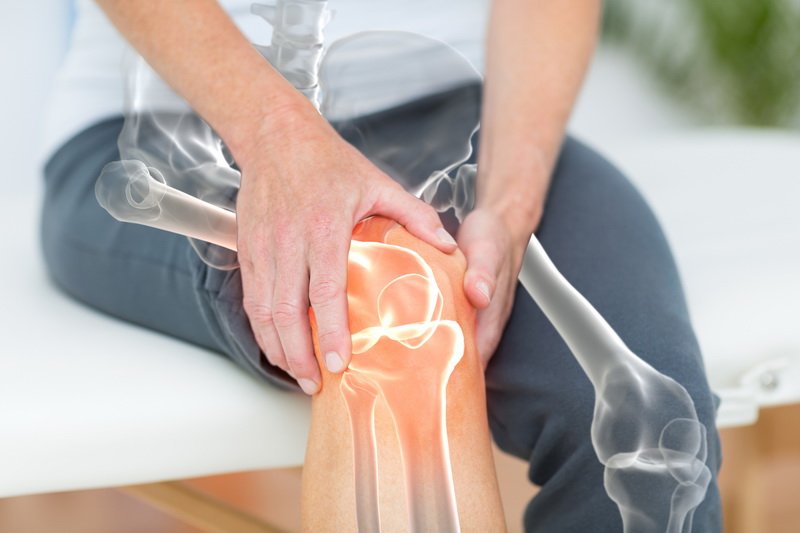
Osteoarthritis of the knee develops when the protective cartilage covering the joint surfaces gradually wears away. As the cushioning diminishes, the bones begin to rub against each other, causing pain, swelling, stiffness, and a grinding sensation that many patients find difficult to ignore. Osteoarthritis is more common after the age of 50, but it can develop earlier in people who have sustained previous knee injuries, are significantly overweight, or have a family history of joint problems.
There is no cure for osteoarthritis, but this does not mean patients simply have to manage their symptoms indefinitely. Our non-surgical knee treatment programme uses platelet-rich plasma (PRP) therapy, bone marrow aspirate concentrate (BMAC), and adipose-derived cell therapy to reduce inflammation, support cartilage health, and improve joint function often delivering results that allow patients to put off, or entirely avoid, a knee replacement.

Meniscal Tears
The meniscus acts as a shock absorber between the thigh and shin bones. Tears can occur suddenly during sport typically through a twisting movement or develop gradually through wear and tear in older patients. Symptoms include pain along the inner or outer knee joint line, swelling, stiffness, and occasionally a sensation of locking or catching. While some meniscal tears require surgical repair, many respond well to regenerative injection therapy, particularly in patients who are not good surgical candidates or who wish to avoid the risks and recovery time associated with arthroscopy.
Ligament and Tendon Injuries
Sprains of the anterior cruciate ligament (ACL) or medial collateral ligament (MCL) are among the most common knee injuries in active people. Patellar tendinopathy sometimes called “jumper’s knee” is another condition we frequently treat, particularly in runners, cyclists, and those who play jumping sports such as basketball or volleyball. For patients with partial ligament tears or chronic tendon pain, PRP injection for the knee in Manchester offers a targeted, non-surgical option with a track record of positive outcomes.


Who Is This Treatment Suitable For?
Non-surgical knee treatment at Ortho Remedy Clinic is appropriate for a wide range of patients. You may be a good candidate if:
- You have been diagnosed with knee osteoarthritis and wish to explore alternatives to replacement surgery
- You have a partial meniscal tear or ligament sprain that has not responded to rest or physiotherapy
- You are an active person or athlete seeking a faster, non-operative route back to sport
- You have previously had a cortisone injection and found the relief short-lived
- You have been told you are "too young" for a knee replacement but are in significant pain
- You have underlying health conditions that make surgery inadvisable
A full assessment with Mr Azhar will confirm whether regenerative treatment is appropriate for your specific condition, severity, and lifestyle. Patients who visit our dedicated knee pain specialist in Manchester are seen on an individual basis there is no one-size-fits-all approach.
Our Non-Surgical Knee Treatments
- Platelet-Rich Plasma (PRP) Therapy
- Bone Marrow Aspirate Concentrate (BMAC)
- Adipose-Derived Cell Therapy
PRP therapy is typically the first-line regenerative treatment for knee conditions. A small sample of your own blood is drawn and processed in a centrifuge to concentrate the platelets cells that contain growth factors responsible for tissue repair. The concentrated plasma is then injected directly into the knee under ultrasound guidance, ensuring accurate delivery to the affected area. PRP is particularly effective for mild to moderate knee osteoarthritis, patellar tendinopathy, and partial ligament injuries. To understand how PRP can help beyond the knee, including for tendinitis and other soft tissue conditions, visit our PRP injection for tendinitis page.
For patients with more advanced osteoarthritis or complex cartilage damage, BMAC therapy uses cells drawn from your own bone marrow. The aspirate is processed and re-injected into the knee in the same visit a completely same-day procedure. BMAC is particularly suited to patients who have not responded fully to PRP and those with significant cartilage loss.
This treatment harvests regenerative cells from a small sample of the patient’s own fat tissue, usually from the abdomen. The processed cells are injected into the affected knee joint. Adipose-derived cell therapy is particularly effective for patients with widespread joint damage or those for whom bone marrow aspiration is less suitable.
All injections are performed under ultrasound guidance to ensure precision. Treatment sessions are walk-in, walk-out and are carried out under local anaesthetic where required, with no need for hospital admission or general anaesthesia.
Your Treatment Journey
Non-surgical knee treatment at Ortho Remedy Clinic is appropriate for a wide range of patients. You may be a good candidate if:
Step -1
Consultation and Assessment
Mr Azhar reviews your full history, examines the knee, and assesses any existing scans or imaging. He will explain exactly what is happening in the joint and, in plain language, what treatment options are most appropriate for your situation.
Step -2
Personalised Treatment Plan
No two knee cases are the same. Your plan will be tailored to the severity of your condition, your activity levels, and your goals whether that is to get back to walking without pain, return to sport, or delay a surgical procedure.
Step -3
Treatment Session
Treatments are performed at our Manchester or Glasgow clinic on a walk-in, walk-out basis. Most sessions take under an hour, and the vast majority of patients travel home the same day without assistance.
Step -4
Follow-Up and Recovery
Following treatment, you will receive clear guidance on activity levels and any post-injection precautions, such as avoiding anti-inflammatory medication. A follow-up review confirms progress and identifies whether a second treatment session would be beneficial.
Book Your Consultation.
You are one step away from getting the best non-surgical treatments at Ortho Remedy!
Make An Appointment
Do you want to live a peaceful life without any discomfort, pain, or swelling in your knees? If yes, then contact us today and book an appointment for our regenerative knee treatment.

MANCHESTER CLINIC
GLASGOW CLINIC
Spiersbridge House, 1 Spiersbridge Way, Thornliebank, G46 8NG
Frequently Asked Questions
Most frequent questions and answers
For patients with mild to moderate osteoarthritis, PRP therapy can significantly reduce pain and improve function, in some cases delaying or avoiding the need for surgery altogether. Whether this is achievable depends on the stage of your condition and the health of the remaining cartilage. Mr Azhar will be honest with you about what is realistic at your first consultation.
Most patients notice gradual improvement over four to eight weeks following their PRP injection. Optimal results are typically seen at around three months. Some patients require a course of two or three injections for the best outcome.
The injection itself is generally well tolerated. Some patients experience mild soreness or swelling in the knee for a few days afterwards, which is a normal part of the healing response. Over-the-counter paracetamol can help manage any discomfort. Anti-inflammatory medications such as ibuprofen should be avoided for at least two weeks after treatment, as they can interfere with the PRP’s action.
No. You can contact Ortho Remedy Clinic directly to arrange a consultation at our Manchester or Glasgow clinic. Many patients come to us after seeing their GP but a referral is not required.
Yes. Ligament sprains, patellar tendinopathy, and partial meniscal tears all respond well to PRP in many cases. For patients looking for targeted sports injury care, our sports injury clinic in Manchester provides specialist assessment alongside our knee treatment service.
Arthroscopy is a surgical procedure performed under general anaesthesia, involving a recovery period of several weeks. For suitable meniscal tears, particularly degenerative tears in older patients, non-surgical treatment with PRP can support the natural healing process with far less downtime and a lower risk profile. Mr Azhar will advise you honestly if surgery is genuinely the better option.
If regenerative treatment does not provide sufficient relief, surgical options remain available nothing is closed off. The benefit of starting with non-surgical treatment is that the risks are minimal, the recovery is quick, and many patients achieve a significantly better outcome than they expected.
Get in Touch
Imagine the possibility where you don’t need pain medication or the need for a medical operation can be sustained or eliminated. There are now therapies available that may increase your body’s natural ability to repair thanks to modern regenerative medicine technology. If you want to learn more about it, please contact us right now.