

Knee injections are sometimes used to help manage persistent knee pain caused by conditions such as osteoarthritis, inflammation and certain soft-tissue problems. For some people, an injection can make walking, climbing stairs and everyday activities more comfortable. However, the improvement may not always last as long as expected.
If knee pain returns after an injection, it is natural to wonder whether another injection is worthwhile or whether a different treatment approach should be considered.
The answer depends on several factors, including the underlying knee condition, the type of injection previously received, the severity of joint damage and how the knee has responded to other treatments. Understanding these factors can help patients make more informed decisions about their next steps.
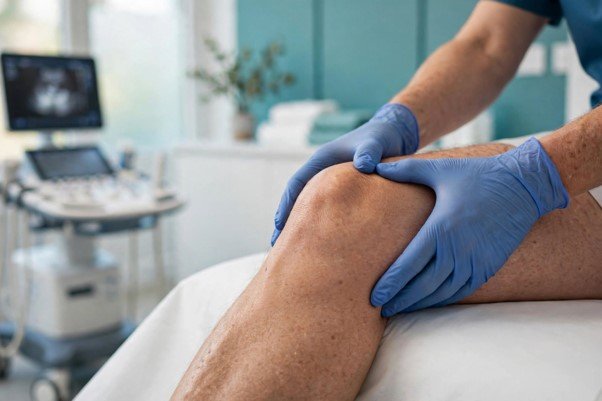
Why Can Knee Pain Return After an Injection?
An injection may help manage symptoms without addressing every factor contributing to knee pain. This is one reason why some patients experience improvement for a period before their symptoms gradually return.
Several factors can contribute to recurring discomfort.
1. The underlying knee condition is still present
Knee osteoarthritis, meniscal degeneration and tendon problems can continue to affect the joint even when pain temporarily improves.
For example, osteoarthritis involves changes to the cartilage and other structures within the joint. An injection may help manage symptoms, but it does not necessarily reverse the underlying structural changes.
Similarly, persistent mechanical problems or tendon injuries may continue to cause discomfort if the underlying issue has not been adequately addressed.
2. The injection provides temporary symptom relief
Different injections work in different ways. Some are primarily intended to reduce inflammation and discomfort, while others are being investigated for their potential effects on tissue-related symptoms.
Corticosteroid injections, for example, may provide short-term relief for some people with osteoarthritis. NICE advises that patients should understand that the benefit generally lasts around two to ten weeks.
When the effect wears off, the original symptoms may become noticeable again.
3. The knee is still exposed to excessive loading
Daily activities place repeated demands on the knee joint. Walking, prolonged standing, climbing stairs, sports and certain occupational activities can all increase the load placed on the joint.
If muscle weakness, reduced mobility or unsuitable activity levels are contributing to the problem, an injection alone may not provide a lasting improvement.
4. The original diagnosis needs reviewing
Not all knee pain is caused by osteoarthritis. Meniscal problems, ligament injuries, patellar tendinopathy and other conditions can produce similar symptoms.
If the previous treatment has not provided the expected improvement, it may be worth reviewing the diagnosis rather than automatically repeating the same procedure.
What Should You Do If Your Knee Injection Has Stopped Working?
The next step should not automatically be another injection. A fresh assessment can help establish why the pain has returned and whether the original treatment remains appropriate.
A specialist may consider several factors before recommending a different approach.
Review the type of injection you received
The first step is to understand which injection was previously administered.
Common examples include:
- Corticosteroid injections: These are used to reduce inflammation and provide temporary symptom relief in selected patients with joint conditions. They do not repair damaged cartilage.
- Hyaluronic acid injections: These have been used to manage osteoarthritis symptoms, although NICE does not recommend their use for osteoarthritis.
- Platelet-rich plasma injections: PRP is prepared from a patient’s own blood and contains a concentrated platelet component. It has been investigated for certain musculoskeletal conditions, including knee osteoarthritis. Clinical results vary, and it is not suitable for everyone.
Knowing what treatment you have already received helps the clinician decide whether a different approach should be considered.
Reassess the condition affecting your knee
A specialist assessment may include a review of your medical history, previous treatments, symptoms and physical examination.
The clinician may want to understand:
- Where exactly the pain occurs.
- Whether the knee becomes swollen or stiff.
- Whether discomfort is worse during movement or at rest.
- Whether the knee feels unstable or locks during movement.
- How far you can walk comfortably.
- Whether previous treatment improved your symptoms and for how long.
Imaging, such as an X-ray or MRI, may be considered when clinically appropriate, particularly if there are unusual symptoms, a history of injury or uncertainty about the diagnosis.
What Treatment Options Can Be Considered After Knee Injections?
There is no single treatment that is suitable for everyone. The appropriate approach depends on the cause of the pain, the extent of joint changes, previous treatment and the patient’s overall health and activity requirements.
Physiotherapy and targeted strengthening
Physiotherapy remains an important part of managing many knee conditions.
A structured programme may focus on strengthening the muscles around the knee, improving flexibility, developing balance and gradually increasing activity tolerance.
For people with knee osteoarthritis, NICE recommends therapeutic exercise tailored to individual needs. Exercise may initially cause some discomfort, but consistent participation can improve physical function and quality of life.
Medication and other conservative treatments
Depending on the diagnosis, medication may be used to help control symptoms and support participation in rehabilitation.
For knee osteoarthritis, NICE recommends considering topical non-steroidal anti-inflammatory medication. Oral medication may be considered when appropriate, taking individual health risks into account.
Activity modification and weight management, where relevant, may also help reduce the demands placed on the knee.
Platelet-rich plasma (PRP) therapy
For selected patients, platelet-rich plasma therapy may be discussed as another treatment option.
PRP is prepared using a small sample of the patient’s own blood. The sample is processed to concentrate platelets in a portion of plasma, which is then injected into the affected area.
Platelets contain proteins and growth factors involved in the body’s natural repair processes. Researchers have investigated whether concentrated platelet preparations may help improve pain and function in certain musculoskeletal conditions.
Some clinical studies have reported improvements in symptoms among people with knee osteoarthritis following PRP treatment. However, the results are not consistent across all studies, and the evidence remains an area of ongoing research.
PRP does not restore severely damaged cartilage or guarantee that surgery can be avoided. Its suitability depends on the patient’s diagnosis, the extent of joint degeneration and other individual factors.
A specialist should explain the potential benefits, limitations, costs and alternatives before treatment is considered.
Patients interested in understanding the procedure can read more about PRP injection treatment for knee pain.
Other regenerative treatment approaches
Some patients may ask about other regenerative approaches, including bone marrow aspirate concentrate (BMAC).
BMAC is prepared from a sample of bone marrow and contains a mixture of cells and biological components. It has been investigated for certain orthopaedic applications, including joint conditions.
However, evidence regarding its effectiveness for knee osteoarthritis remains limited. It should not be presented as a proven cartilage-regenerating treatment or a guaranteed alternative to knee replacement.
Whether this approach is appropriate depends on an individual clinical assessment and an informed discussion of the available evidence.
When should surgery be discussed?
Non-surgical treatment is not appropriate for every patient.
If knee pain substantially affects quality of life and non-surgical management has been ineffective or unsuitable, a surgical opinion may be appropriate.
This does not mean that every patient with persistent knee pain needs a knee replacement. The decision depends on symptoms, examination findings, functional limitations, imaging where appropriate and the patient’s preferences.
Is PRP Worth Considering If Steroid Injections Have Not Worked?
This is a common question among people who have experienced only temporary improvement following a corticosteroid injection.
PRP and corticosteroid injections are different treatments. Corticosteroids are used to reduce inflammation and provide short-term symptom relief, whereas PRP is being investigated for its potential effects on symptoms and tissue-related biological processes.
However, PRP should not automatically be considered the next step after an unsuccessful steroid injection.
The decision depends on:
- Whether the diagnosis is confirmed.
- Whether the patient has mild, moderate or advanced osteoarthritis.
- The degree of cartilage and joint damage.
- Previous treatments and their outcomes.
- General health and any factors affecting treatment suitability.
- The patient’s expectations and preferences.
For some patients, PRP may be worth discussing with an appropriately qualified specialist. For others, physiotherapy, medication, another treatment approach or surgical assessment may be more appropriate.
An individual assessment is therefore more useful than choosing an injection based solely on the previous treatment outcome.
When Should You See a Knee Specialist?
Persistent knee pain deserves attention, particularly when it begins to interfere with everyday activities or continues despite previous treatment.
You should consider seeking specialist advice if:
- Knee pain repeatedly returns after injections.
- Walking or climbing stairs becomes increasingly difficult.
- Swelling or stiffness continues.
- The knee feels unstable or gives way.
- Pain interferes with sleep or daily activities.
- You are unsure whether another injection is appropriate.
- You have been advised to consider surgery and want to understand the available options.
A knee specialist can review your previous treatment, assess the underlying problem and explain which options may be suitable.
A hot, red, markedly swollen knee, especially with fever or feeling unwell, requires urgent medical assessment. Sudden severe pain, inability to bear weight or a significantly swollen knee following an injury also warrants prompt assessment.
Understanding Your Options at Ortho Remedy Clinic
Patients experiencing persistent knee pain may benefit from an assessment that considers the underlying condition rather than focusing only on temporary symptom relief.
At Ortho Remedy Clinic, knee conditions are assessed by a consultant orthopaedic surgeon, with treatment discussions based on the patient’s symptoms, examination findings, previous treatment and individual circumstances.
Available non-surgical approaches may include physiotherapy-led management, injection-based treatments and selected regenerative procedures where clinically appropriate.
Patients can find further information about non-surgical knee treatment and the conditions assessed by the clinic.
For patients considering PRP, the clinic provides further information about its PRP knee injection service in Manchester and PRP knee injection service in Glasgow.
The most appropriate option should always be determined following an individual consultation. Not every patient will benefit from injection-based treatment, and a clear explanation of the alternatives is an important part of the decision-making process.
Frequently Asked Questions
Why does my knee still hurt after a steroid injection?
A corticosteroid injection may reduce inflammation and provide temporary pain relief, but it does not reverse underlying cartilage damage or correct every cause of knee pain. Symptoms may return when the effect of the injection wears off. If pain persists or repeatedly returns, the original diagnosis and treatment plan may need reviewing.
How long should a knee steroid injection last?
The duration varies between individuals and depends on the underlying condition. NICE advises that corticosteroid injections for osteoarthritis generally provide short-term relief lasting around two to ten weeks. Some patients may experience a shorter or longer response.
Can I have another knee injection if the first one did not work?
Possibly, but repeating an injection is not automatically the best option. A clinician should review the type of injection, the response to previous treatment, the diagnosis and any potential risks before recommending another procedure. If the first injection provided little or no improvement, reassessing the underlying cause may be more useful.
Is PRP better than a steroid injection for knee pain?
Neither treatment is universally better. Steroid injections can provide short-term relief for selected patients, while PRP has been studied for its potential to improve pain and function in certain knee conditions. The evidence, expected outcomes and limitations differ. The most suitable approach depends on the diagnosis and individual circumstances.
Can PRP help knee osteoarthritis?
Some clinical studies have reported improvements in pain and physical function following PRP treatment, particularly in selected patients with mild to moderate knee osteoarthritis. However, results vary, and PRP does not reverse established cartilage loss. Patients should discuss the current evidence and suitability with a specialist.
Is PRP suitable for advanced knee arthritis?
Patients with advanced knee osteoarthritis may be less likely to benefit from PRP than those with earlier-stage disease. The extent of joint damage, pain severity and functional limitations all need to be considered. In some cases, surgical assessment may be more appropriate.
What is the difference between PRP and BMAC for knee problems?
PRP is prepared from a patient’s blood and concentrates platelets in plasma. BMAC is obtained from bone marrow and contains a different mixture of biological components. Both have been investigated for orthopaedic applications, but their evidence, preparation methods and potential uses differ. Neither should be assumed to regenerate severely damaged cartilage or guarantee a successful outcome.
Do I need an MRI before considering another knee injection?
Not necessarily. An MRI is not routinely required for every patient with knee osteoarthritis. A clinician may diagnose typical osteoarthritis through symptoms and physical examination. Imaging may be considered when the diagnosis is uncertain, symptoms are unusual or another injury or condition is suspected.
Can physiotherapy still help if knee injections have stopped working?
Yes. Physiotherapy can help improve muscle strength, joint movement, balance and functional ability. It is an important part of managing many knee conditions, including osteoarthritis. An appropriately tailored exercise programme may be recommended alongside other treatments.
When should I consider seeing a knee specialist?
Consider a specialist assessment if knee pain continues despite treatment, repeatedly returns after injections, affects your walking or daily activities, or makes it difficult to understand your next treatment options. A specialist can review your diagnosis and explain whether further non-surgical treatment or surgical assessment may be appropriate.
Final Thoughts
When knee injections no longer provide lasting relief, it does not necessarily mean that all treatment options have been exhausted. However, simply repeating the same procedure may not address the reason the pain keeps returning.
Understanding the underlying knee condition, reviewing previous treatment and considering the available evidence can help patients make better decisions about their care.
For people experiencing ongoing knee pain, a specialist assessment can provide a clearer understanding of the possible next steps, including whether conservative treatment, PRP or another approach may be appropriate.